
What Happens If You Refuse a DEA Pharmacy Inspection in Georgia? The Answer Could Save Your License
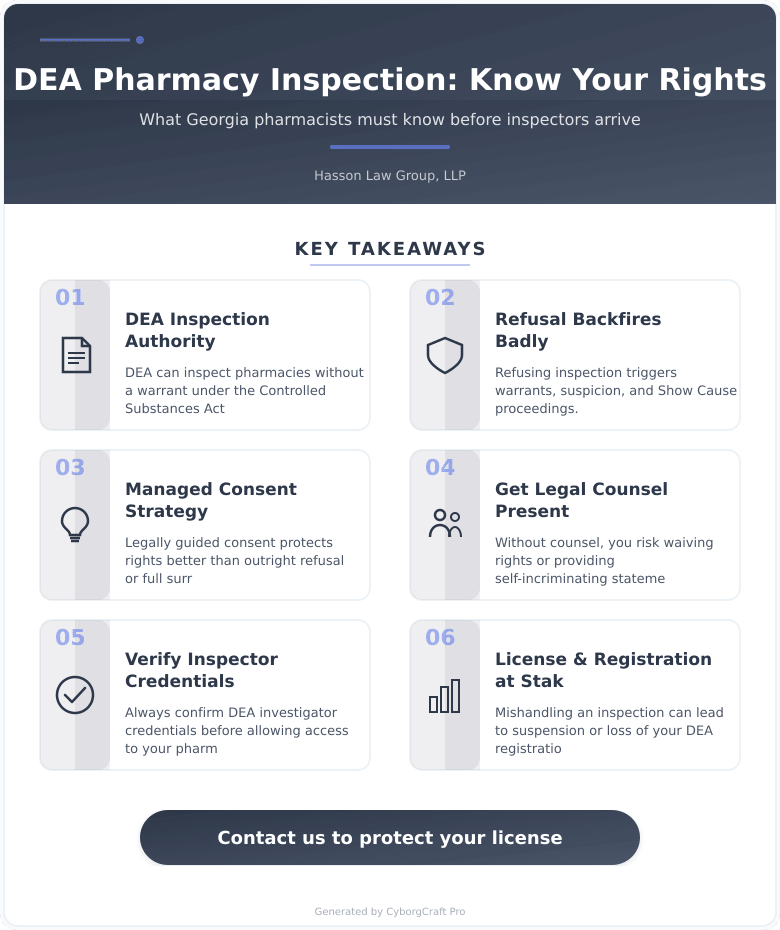
Refusing a DEA pharmacy inspection in Georgia is one of the highest-risk decisions a pharmacy owner can make. Under the Controlled Substances Act, DEA Diversion Investigators have broad administrative authority to inspect records, inventory, and security systems without a warrant when a registrant consents - and outright refusal can trigger immediate escalation, inspection warrants, and Order to Show Cause proceedings against your DEA registration. Georgia pharmacies face a dual compliance structure: DEA findings can independently trigger action by the Georgia State Board of Pharmacy under state law. In 2026, the DEA Atlanta Division has increased its inspection frequency, with particular focus on pharmacies flagged through Georgia's PDMP for high-volume Schedule II dispensing. The post outlines the difference between administrative inspections and criminal investigations, explains when managed consent with legal counsel is the right approach versus outright refusal, and provides a six-step action plan pharmacists can follow when investigators arrive. It also covers the most common mistakes Georgia pharmacy owners make during inspections, including allowing multiple staff members to answer questions and failing to document what records were copied. A comparison table breaks down the legal risk and escalation potential of each possible response strategy. The FAQ section addresses warrant requirements, license jeopardy timelines, and whether involving an attorney during an inspection raises suspicion. The core message: your DEA registration is the foundation of your business, and the time to prepare is before an investigator walks through your door.